
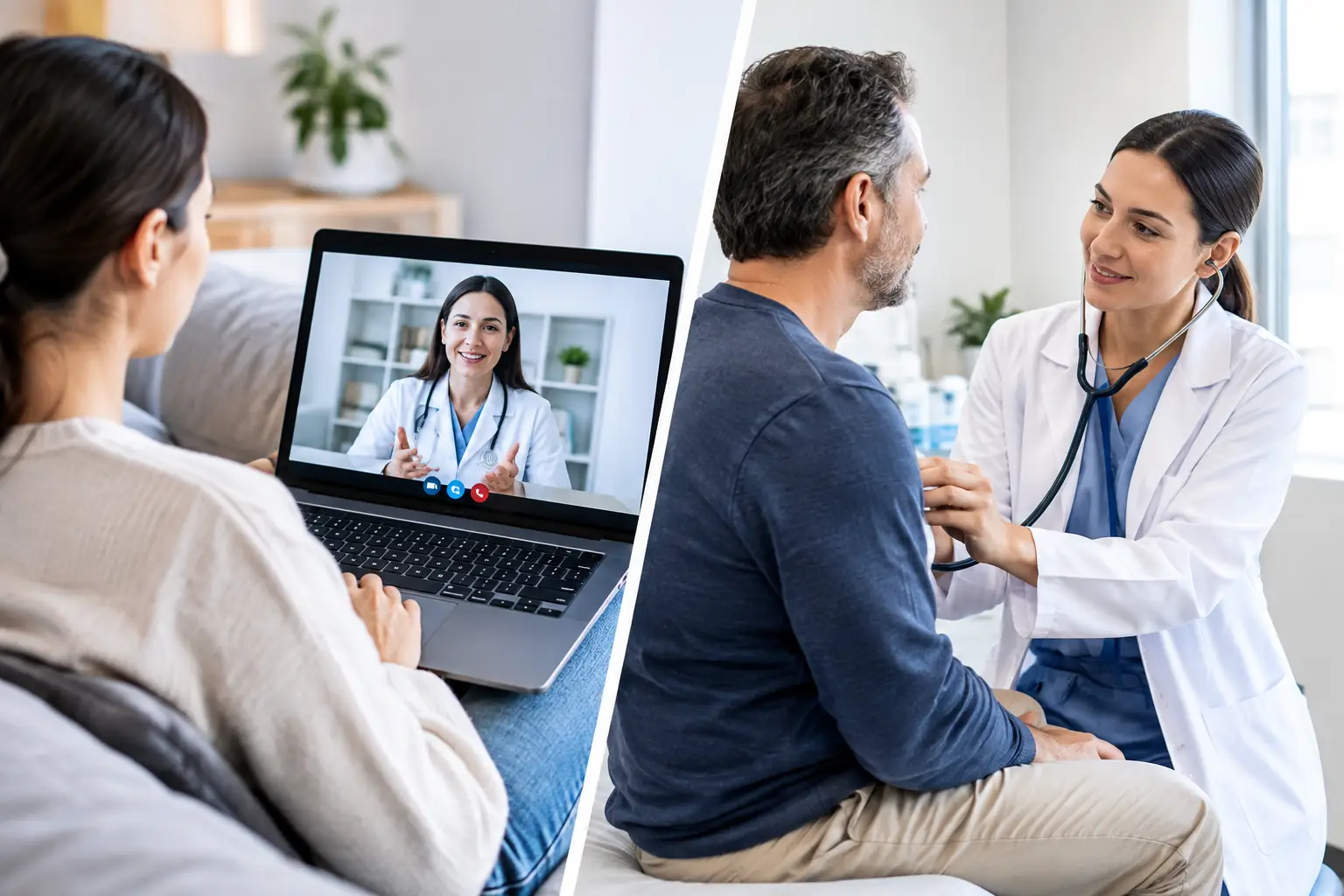
You wake up in your Athens hotel with a sore throat, fever and no idea whether it is safe to wait. The choice between telemedicine or an in-person doctor is not about which option is better in every case. It is about getting the right level of care quickly, in a language you understand, without adding stress to an already difficult day.
For many travellers and international residents, a video consultation is the fastest route to professional advice. In other situations, a doctor needs to listen to your chest, examine an injury, take a swab, arrange tests or begin treatment without delay. Knowing the difference can save valuable time.
Telemedicine or in-person doctor: start with the symptoms
Telemedicine is a practical first step when your symptoms are mild, familiar and unlikely to require a physical examination. It allows a doctor to assess your history, review your symptoms, advise on self-care and decide whether you need testing, medication or a face-to-face review.
An in-person consultation is usually the better choice when symptoms are new, worsening or difficult to describe. It is also the right option when you need a hands-on examination, diagnostic testing, a medical certificate, treatment for an injury or urgent reassurance before travelling.
The key question is not, “Can this be discussed by video?” Almost anything can. Ask instead, “Can a doctor make a safe decision without examining me?” If the answer is uncertain, choose an in-person assessment.
When telemedicine can be the right choice
A remote consultation can be particularly useful when you are resting at a hotel, staying in a short-let flat, caring for an unwell child or trying to avoid travelling across the city while ill. It can also help when you need fast guidance outside normal clinic hours.
Telemedicine may be suitable for common problems such as a mild cold, hay fever, a simple skin rash, minor stomach upset, recurring migraine, medication questions or advice about an existing condition. It can also be a sensible way to discuss whether your symptoms need urgent attention before you leave your accommodation.
For international patients, the value is often clarity. You can speak to an English-speaking doctor, explain what has changed, show visible symptoms on camera where appropriate, and receive straightforward next steps. If a prescription is clinically appropriate, the doctor can advise you on the process. If tests or an examination are needed, you can be directed to the next level of care rather than guessing.
Telemedicine has limits, however. Camera quality, poor lighting and a rushed symptom description can make it harder to assess a problem accurately. A remote doctor cannot check your blood pressure, oxygen level, temperature, ears, throat, abdomen or reflexes unless you have suitable equipment and know how to use it.
When an in-person doctor is the safer option
Choose a face-to-face consultation when an examination could change the diagnosis or treatment. A persistent cough may need a chest examination. Severe ear pain may require an otoscope. Abdominal pain needs careful assessment, especially if it is localised, worsening or paired with vomiting or fever.
In-person care is also more appropriate for injuries. A sprained ankle, cut, burn, possible fracture, infected wound or sports injury cannot always be assessed reliably on a screen. A clinician may need to clean and dress a wound, check circulation and movement, provide pain relief, arrange imaging or decide whether hospital treatment is necessary.
For travellers, speed matters. You may need diagnostic testing for a suspected infection, a rapid assessment before a flight, or treatment that should not wait until you return home. A clinic visit, hotel visit or home visit can bring the examination to the setting that makes most sense for your condition.
Warning signs: do not rely on telemedicine alone
Seek urgent in-person or emergency care if you have any of the following:
- Chest pain, severe breathing difficulty or blue lips
- Signs of stroke, including facial weakness, speech problems or sudden confusion
- Severe allergic reaction, swelling of the face or throat, or widespread hives with breathing symptoms
- Heavy bleeding, a significant head injury, loss of consciousness or a suspected broken bone
- Severe abdominal pain, repeated vomiting, black stools, fainting or dehydration
- High fever with severe headache, stiff neck, rash or rapidly worsening illness
If you are unsure whether symptoms are serious, treat uncertainty as a reason to seek professional advice promptly. It is safer to be assessed early than to wait for a problem to become harder to manage.
What an in-person consultation can provide
A good face-to-face appointment does more than confirm what you already suspect. It gives the doctor information that cannot be gathered through conversation alone. This may include vital signs, a physical examination, urine testing, blood tests, throat swabs, ECG assessment or other diagnostic testing, depending on your symptoms.
It also makes practical treatment easier. You may need a prescription after an examination, wound care, injections, fluids, a fit-to-fly assessment or documentation for travel insurance. If a higher level of treatment is required, a private clinic can coordinate with a private hospital and help make the next step clear.
This matters in Athens when you are unfamiliar with local systems, feeling unwell and trying to communicate in English. The right provider should explain what they are checking, why it matters and exactly what to do next.
The practical choice for travellers in Athens
Your location should not become a barrier to care. If you are able to travel and need tests or a full assessment, a walk-in consultation can be the quickest route to diagnosis and treatment. If you are too unwell to leave your room, have limited mobility or are caring for someone else, a hotel or home visit may be more appropriate.
HOMED Clinic provides 24/7 medical support for patients who need English-language care in central Athens, including walk-in consultations, telemedicine, hotel visits, home visits, diagnostic testing, prescriptions and coordination with private hospitals when needed. The aim is simple: receive the level of medical care your symptoms require, without navigating a confusing system alone.
A simple decision rule
If you mainly need advice, symptom guidance or a decision about whether you need further care, telemedicine can be an efficient starting point. If you need a clinician to see, listen, feel, test or treat the problem, arrange an in-person appointment or visit.
Do not choose video care simply because it feels easier. Equally, do not delay advice because you assume every problem requires a clinic visit. The best option is the one that gives the doctor enough information to make a safe decision and gives you a clear plan.
FAQ
Can a doctor prescribe medication after telemedicine?
Sometimes, yes. Whether a prescription is appropriate depends on your symptoms, medical history and the doctor’s clinical assessment. Some conditions require an examination or testing before medication can be prescribed safely.
Can telemedicine diagnose an infection?
It can help assess likely causes and guide next steps, but it cannot replace tests or an examination when these are needed. A suspected urinary infection, strep throat, chest infection or COVID-like illness may require testing or a face-to-face review.
What if I start with telemedicine and need to be seen?
That is a common and sensible pathway. A remote consultation can quickly identify whether you need a clinic appointment, a doctor at your hotel or home, diagnostic testing, or hospital assessment.
Should I wait until I return home?
Not if symptoms are worsening, affecting your ability to eat, drink, breathe, walk or sleep, or if you may need prompt treatment. Travel plans can wait. Early medical advice often prevents a minor issue from disrupting the rest of your stay.
When you are ill away from home, the right care should feel direct and manageable. Describe your symptoms honestly, mention any medicines or allergies, and choose the fastest safe route to an assessment. A clear medical plan can give you the confidence to rest, recover and get on with your time in Athens.