
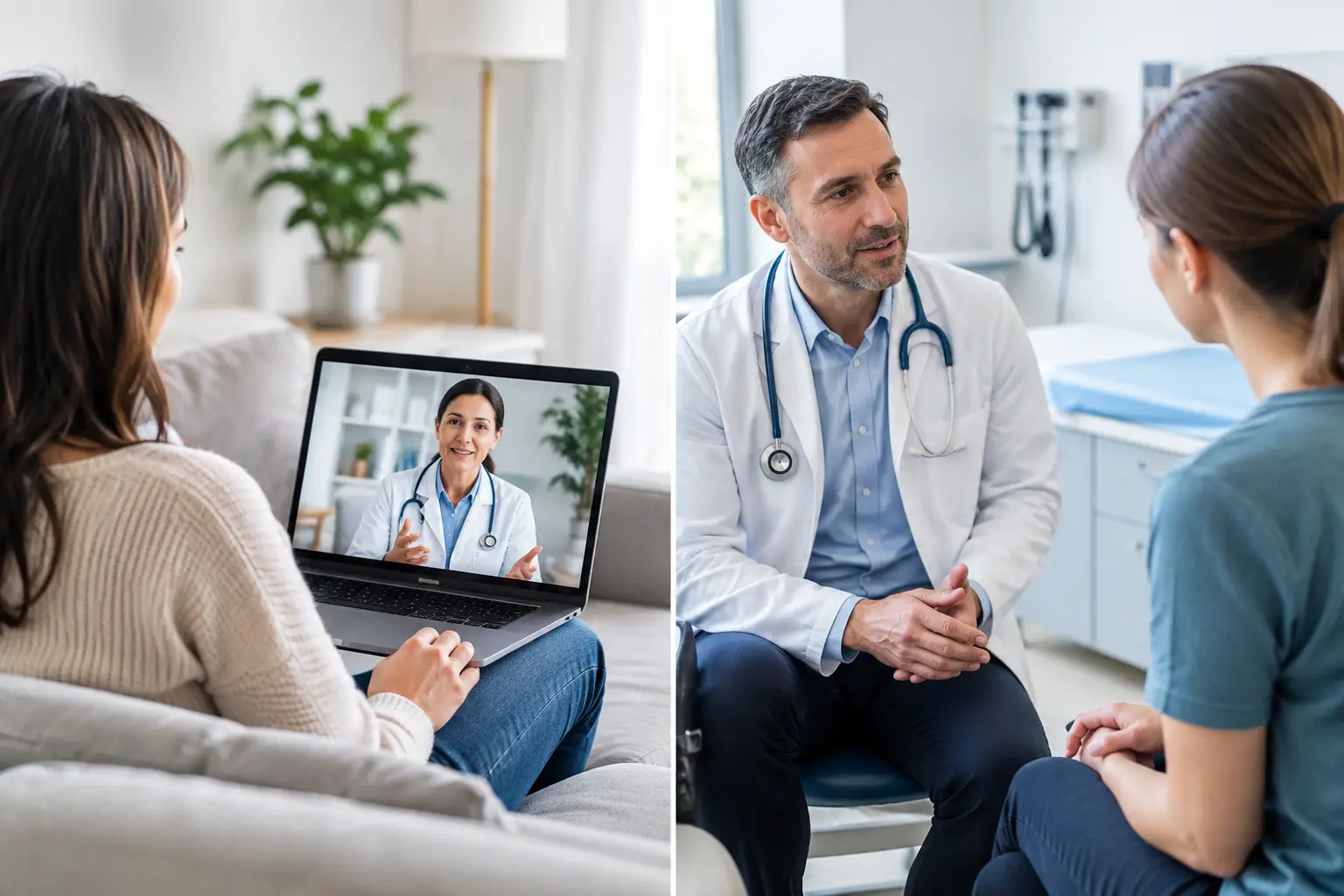
Feeling unwell in a hotel room in Athens creates a practical question: do you need to travel to a doctor, or can a video consultation solve the problem safely? Telemedicine versus clinic visits is not simply a question of convenience. The right option depends on your symptoms, whether you need a physical examination or tests, and how quickly your condition may change.
For travellers, expatriates and international residents, the best care is the care that gives you a clear answer without unnecessary delay. Sometimes that is a doctor on screen. Sometimes it is a walk-in consultation, a hotel visit or urgent assessment at a clinic.
Telemedicine versus clinic visits: the practical difference
Telemedicine is a remote consultation by secure video or telephone. You speak to a doctor, describe your symptoms, show visible concerns where appropriate, discuss your medical history and receive advice on the next step. It can be particularly useful when you are resting in your accommodation, cannot easily leave a child or travelling companion, or need prompt English-language guidance outside usual hours.
A clinic visit gives the doctor more information. They can check your vital signs, listen to your chest, examine an injury, look inside the ears or throat, assess abdominal tenderness and arrange diagnostic testing immediately. This matters when a condition cannot be safely judged through conversation alone.
Neither route is automatically better. Telemedicine is often the fastest starting point for straightforward issues. A clinic consultation is usually the better choice when the diagnosis depends on an examination, testing or treatment that must be given in person.
When telemedicine is a sensible first step
A remote consultation can save time and stress for symptoms that are mild, stable and easy to describe. It is also useful when you need medical advice before deciding whether to leave your hotel or flat.
Common situations suited to a video consultation
Telemedicine may be appropriate for minor skin rashes, mild allergy symptoms, uncomplicated cold or flu-like illness, medication questions, travellers’ diarrhoea without warning signs, and advice about a previous diagnosis. It can also help when you need a prescription review, a sick note discussion, or guidance on managing symptoms until you can be seen in person.
For an international visitor, the value is often clarity. You can explain symptoms in English, ask whether your travel plans should change and understand exactly what to monitor. If medication is appropriate, the doctor can advise on prescriptions and how to obtain them locally.
Remote care is also useful as triage. A doctor may determine that home care is reasonable, arrange a clinic appointment, recommend a hotel or home visit, or direct you to urgent hospital care. That decision can prevent both needless travel and dangerous delay.
What telemedicine cannot reliably do
Video cannot replace hands-on assessment when the doctor needs to feel, listen, test or treat. A camera may show a rash, swelling or red eye, but it cannot measure oxygen levels, blood pressure, temperature, heart rhythm or urine results unless you already have reliable equipment available.
It is also harder to assess dehydration, abdominal pain, chest symptoms, a deep wound, an ear infection or a possible fracture remotely. Lighting, connection quality and the patient’s ability to describe symptoms can affect the assessment. For these problems, convenience should not outweigh certainty.
When a clinic visit is the better choice
Choose an in-person consultation when symptoms are new, worsening, severe or difficult to explain. The ability to examine you and arrange tests during the same visit can shorten the time to diagnosis.
A clinic visit is particularly helpful for fever that persists or returns, painful urination, severe sore throat, ear pain, chesty cough, shortness of breath, significant vomiting or diarrhoea, abdominal pain, injuries, infected bites, allergic reactions, and concerns about sexually transmitted infections. It is also the sensible option when you need a medical certificate, laboratory work, swabs, imaging referral or treatment administered by a clinician.
At a private clinic, the process should be straightforward: speak with an English-speaking doctor, have the relevant examination, receive diagnostic testing if required, and leave with a clear treatment plan and prescription. If your condition needs specialist or hospital treatment, the clinic can coordinate the next stage rather than leaving you to navigate an unfamiliar system alone.
Walk in, book ahead or request a visit
Your location and mobility matter. If you feel well enough to travel, a walk-in consultation can be the quickest route to assessment. If you are unwell but stable, a scheduled appointment may suit your day better.
If leaving your accommodation is difficult, a hotel visit or home visit can be more appropriate. This is especially valuable for parents caring for an ill child, patients with limited mobility, people recovering from an injury, or travellers who are too unwell to use transport comfortably. The doctor can assess you where you are and decide whether further testing or hospital transfer is needed.
HOMED Clinic provides 24/7 support in Athens through telemedicine, walk-in consultations, scheduled care and doctor visits to hotels and homes, with diagnostic testing, prescriptions and coordination with private hospitals when required.
Warning signs: do not wait for a video appointment
Telemedicine should never delay emergency care. Seek urgent in-person medical help immediately if you have chest pain, severe difficulty breathing, fainting, confusion, weakness or numbness on one side of the body, a seizure, severe bleeding, blue lips, a serious head injury, or signs of a severe allergic reaction such as facial swelling or trouble breathing.
You should also be assessed urgently for severe or increasing abdominal pain, vomiting that prevents you keeping fluids down, blood in vomit or stool, a high fever with confusion or a stiff neck, sudden vision changes, or rapidly spreading redness and swelling around a wound. These symptoms may need examination, monitoring, scans, blood tests or treatment that cannot be delivered remotely.
If you are unsure whether a symptom is serious, choose the more cautious option. A prompt assessment is preferable to waiting overnight in a hotel room and hoping the problem settles.
How to make the right choice quickly
Start with three questions. Are your symptoms mild and stable? Do you need a physical examination, test or immediate treatment? Can you travel safely and comfortably?
If symptoms are mild, stable and do not appear to require testing, telemedicine can provide fast direction. Have your passport details, current medications, allergies, medical history and a brief timeline of symptoms ready. If you have a thermometer, note your temperature. Good information helps the doctor make a safer decision.
If you answer yes to needing an examination or tests, arrange an in-person consultation. Do not take antibiotics left over from a previous trip or borrowed from another person. The wrong medicine can mask symptoms, cause side effects and make later diagnosis harder.
For travel insurance, keep invoices, prescriptions, test results and medical reports. A clinic can usually provide the documentation you need for a claim, but ask at the time of your consultation if a particular format is required.
FAQ: telemedicine versus clinic visits
Can a doctor prescribe medication after telemedicine?
In many appropriate cases, yes. The decision depends on your symptoms, medical history and local prescribing requirements. If the doctor cannot prescribe safely without examining you, they will advise an in-person consultation instead.
Can telemedicine arrange tests in Athens?
A remote doctor can advise whether you need blood tests, swabs, urine testing or other diagnostics and help direct you to the right level of care. When testing is likely to be needed quickly, a clinic visit is often more efficient.
Is a clinic visit worth it for a minor illness?
It can be, particularly if symptoms are worsening, you need reassurance before flying, or language barriers make self-management difficult. For clearly mild and stable symptoms, telemedicine may provide the answer without requiring you to travel.
What if my symptoms worsen after a remote consultation?
Follow the safety advice you were given and seek in-person care without delay. A remote assessment reflects how you are at that moment; changing symptoms need a fresh assessment.
When you are ill away from home, the goal is not to choose the most convenient option at all costs. Choose the level of care that gives you a safe diagnosis, clear treatment and the confidence to get back to your stay in Athens.